
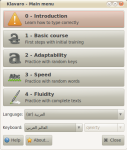
برنامج يبدو جيدا لتعلم الطباعة العمياء في أوبونتو و هو،
“Klavaro”
و يمكنك تنصيبه من:
“Ubuntu Software Center”
أو ببساطة يمكنك إستخدام هذا الأمر:
“sudo apt-get install klavaro”
برنامج يبدو جيدا لتعلم الطباعة العمياء في أوبونتو و هو،
“Klavaro”
و يمكنك تنصيبه من:
“Ubuntu Software Center”
أو ببساطة يمكنك إستخدام هذا الأمر:
“sudo apt-get install klavaro”

Well, I couldn’t find an appropriate title for this article except the above one! The story is simple, I suddenly couldn’t find the “hibernate” option while shutting down and this annoyed me a little bit, I took a quick look around at that time and didn’t find a quick solution, so I just went on without it!
Today, I declared war, and started my hunt for the hibernate option, dead or alive, doesn’t matter to me, and the surprise is:::: My swap space wasn’t getting recognized and I was swap-less!!! All that time I was working without a swap space!!
I discovered this when I checked my fstab “sudo gedit /etc/fstab” and found my swap partition there at “/dev/sda6” while when I opened the disk utility (System -> Administration -> Disk Utility), I – luckily – saw that my swap space wasn’t at “/dev/sda6”, it was at “/dev/sda3” which was a big shock to me, anyway, the discovery of the problem is the key to solving it, so I did the following:
Also, I knew why this problem occurred, I recently backed up my old HDD which had too many bad sectors and restored the OS on another HDD, this messed up some information about the partitions, especially their UUIDs.
Hint: You can query /proc/swaps to make sure your swap partition is in use “sudo cat /proc/swaps”
I think this also was the cause of many of the crashes that my system ran into, will see by time
Fact #2- Technology Innovation is just a decoration in the companies, most of the companies which have Research and Technology are not serious about it, they do not induct a proper budget for R&D, most of these companies open R&D in The Middle East to make up a portfolio for themselves, or to Arabize their products, but are they serious about it? No they are not
When I was graduated I started working in my dream field, under the title I always wished for myself, as a Mixed IC Designer in the Research & Development of a major Egyptian brand, a Consumer Electronics Manufacturer, namely International Electrical Products, of Bahgat Group, Brand (Goldi).
Dr. Ahmed Bahgat and Dr. Hany Assal opened this center around the year 1996-1997, to be the first R&D in the private sector in this domain, if we counted El-Araby Toshiba center, which is just an arabization center, it could be counted second, but frankly speaking we can never consider Toshiba El-Araby an R&D by any means, and the time I joined in August 2000, it was a reputable position, specially that the criteria of selection was not easy at that time, and it included the elite of graduated engineers at that time, maybe the selection criteria of Mentor Graphics and MEMSCAP, which was just starting and integrating a team at that time was tougher, but knowing the numbers selected here and there, it was really one’s luck to be selected and hired in such a position. I felt too lucky at that time, and considered myself one of top 5% selected in the market.
At the time I joined, there was a conflict that settled down by a break up in the company between Dr. Ahmed Bahgat, and Dr. Hany Assal, and Dr. Hany left his position as the leader of IEP, and the direct supervisor on the R&D, and they had to hire Dr. Amr Bayoumi to direct the R&D activities, and left the other leadership activities to some ex-military leaders who filled in after Dr. Hany Assal.
Frankly speaking, this change came as the first step in the demolition of the R&D of Bahgat group, besides some other bad strategic moves, in which Bahgat Group started Horizontal growth based on bank loans, starting industries in refrigerators, water heaters, ovens, furniture, marble, the satellite channels, and the most famous of all Real Estate project Dream Land of Sixth of October, and all these steps were started at once.
This of course withdrew a lot of leadership energy into these activities, a huge budget, and the fact that Dr. Hany Assal left the group, was disastrous to the R&D activities, as a lot of consultants who used to cooperate with Dr. Hany Assal stopped appearing again (maybe relationships and act of being compassionate with him? maybe financial problems? I do not exactly know). Besides this move, the administrative leadership was transferred to the TV manufacturing leadership, and the role of the R&D Manager was more into research and development, and was treated as an internal department, interlocking with other departments, and the independence of the R&D was jeopardized by this move as a first step.
No one can blame Dr. Amr Bayoumi, he took over in very tough circumstances, and it was his first management duty in Egypt after some good experiences in the U.S., and it seems he had to learn more about the management culture and environment of Egypt before accepting this challenge, however, I can say he managed with minimal losses, and succeeded to elongate the period of keeping the R&D center open in Bahgat group for 4 more years, as I believe if it was not him, the factory leadership would have shut it down from first year.
From my humble experience I recall at this time, that Dr. Ahmed Bahgat, and the leadership of Bahgat group, used to get the visitors in tours around the office, and each visit, we were informed front end, that there will be a tour around, as the offices were behind some transparent glass, each room is fit for 3 to 4 engineers, me and my two neighbors used to giggle around this, and have some humor, start “goldfish operation” , or “fish bowl” where we imitate the life of golden fishes inside a fish bowl, and the human owner will show us to his friends, specially that when this information was passed to us by the administrative officer who ran the different administrative activities in the office, he used to tell us “open something that shows innovation on your desktops”, and this each time gave us a very good reason to keep on the laughs and jokes around these visits.
In these visits, the management team used to show us to the visitors from behind the glass we can hear them talking about how we are Hi-Tech Engineers, and that we are innovators, and we work with fabs, and make super chips, and in some cases they open the door and introduce the visitors directly to us asking us to explain, and we know well whatever bullshit we say, we will not be questioned, and this is literally what we did, and in minor cases we fell down laughing till the end of the day after they just turn around and start exiting, you can imagine where 3 fresh graduate engineers minds could take them to 🙂
Actually the message from these visits was really destroying to our morale, as besides the fact that some serious trainings were blocked, support and sponsorship to graduate studies, and we had some serious tools and Electronic Design Automation (EDA Tools) issues including expired licenses and missing licenses the company did not want to invest money in, we felt like we were there just for these visits and this made the sense of belonging and achievement totally demolished.
When I looked outside in the market, I found Sakhr, Harf, Microsoft, IBM, Orange Labs, and Quicktel, and maybe some others, who really focus on two things as a strategy:
1- Having an R&D center
2- Arabization is priority number 1
The fact that the R&D is present does not include what strategy does it adopt, what are the main product lines (besides arabized contents). But it is just a clear message from the leadership team, just we want to keep a picture perfect, hold on, here we go… Click … “SMILE.. We HAVE R&D on board”
Of course such a strategy fires back on its holder, as the R&D develops into a cost center that would never generate revenue, instead of setting an edge in competition thus guaranteeing an extra market share, it becomes a burden, and the burden is first to cut short on the first consideration to cut costs, and this is what happened with IEP R&D around year 2005-2006, and with QuickTel around 2008, and what I see happening with Orange Labs in Cairo, as there are informations they intent to cut some extra positions, and close some teams, as for almost 3 years it was proven that there is no much added value to the center.
It has to be clear to Leadership, and this is a strong message to them, and anyone considering to open a technology innovation business… Take care where you are leading your employees to, prove them profitable by setting a profitable strategy. Yes profit is not short term, you have to spend for 3 to 5 years, but there are quick wins that could show you are on the right road, and you have to display them, you have to have product roadmaps, serious tip outs, people have to see your brand and products in the market, even with minimal developments in the beginning, but it is serious and motivating to your teams and your corporates, the peer pressure will be less from other departments in this case, and the employee “geeks” moral will be higher. And aiming high will let you reach an edge that will lead in technology by time, there are many stories of just starting companies that boomed in no time namely Flip (of Flip Cameras), Google, Facebook, MySpace, YouTube, all were nothing before they became that brand, and we can have in the Middle East our brands
Using a decoration strategy is never helpful, we need to seriously embrace innovation, and believe it is our salvation in the market, it is what defines our edge, and protects our own brands, if we intend to have one competing globally one day !
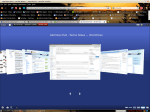
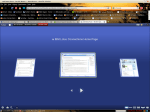
Today, I’ll introduce to you a Firefox addon that I liked, it adds some nice eye candy to Firefox and works on all platforms (Linux, MAC and Windows). This addon is named Foxtab, and it’s one of the most popular Firefox extensions, it lets you navigate your tabs in an easy and beautiful way, you really should give it a try, here are some screenshots for Foxtab on my desktop:


Fact #1– “Technology employment market is very narrow, when you are in one company, you can count the geeks in other companies, when you stay for more than 4 years, you are almost stuck, and it is not easy anymore to move to another competitive employment market”
The Employment market in technology innovation is very narrow in The Middle East
We have in Egypt, around 11 working small businesses taking a stream line of technology innovation as number one line of business, namely: ” New Port Media (Dr. Nabil Rene), SySDSoft (Dr. Khaled Ismail), Silminds (Dr. Hossam Aly Fahmy), ICT (Dr. Hesham Kamel), Swiftronix (Dr. Ayman Wahba), Silicon Vision (Eng. Tarek ElEsseily), Consultix Egypt (Eng. Amr El Gazzar), Tietec (Eng. Essam Abdrabou), MEMS Vision , Varkon SemiConductors (Dr. Ahmed Shalash, Dr. Hesham Hamed) , and Cloud9ers (Eng. Ahmed Kamal) which is sited in ElMansoura, and I cannot find a website for it”
6 Medium Enterprises: “AsgaTech (Eng. Aly Helmy, Eng. Maged Shaker), Si-Ware Sytems – SWS (Dr. Hisham Haddara), Orange Labs (Eng. Hussein El Gueretly), ElSewedy Electrometer (Eng. Yasser Abdelbary), Valeo, Mentor Graphics)
In addition to some IT and Telecom infrastructure companies like Linux Plus, IBM, Orange Business Services, EMC2 Egypt, IT Worx, IT Synergy, IT Soft, Bayan Tech, Giza Systems, Link Development, RDI, EME IT, GlobeSoft, Zad Solutions, Future Soft, Egypt Soft, Egypt Soft Commerce, Global Brands, Oracle Egypt, Microsoft Egypt, Etisalat Data, Raya, Vodafone Egypt, MobiNil, Etisalat, Satyam, TE Data, FingerPrint, Advanced Computer Technology, HP, Nokia Siemens Networks, Ericsson, Huawei, Alcatel-Lucent, Link Dot Net, Delta Telecom, Sakhr, Harf, and others that are many, but they are not necessarily setting an edge in technology in Egypt or The Middle East, because they do not provide solutions that are necessarily based on Innovation, Research and Develolpment, however, they are more considered either Solutions Integrators, Software Firms, Service Providers, or Operators, which is a concept in Leadership that is basically different than what is intended as a concept of Technology Innovation. However, they can have what is considered a pool of available employment opportunities, competing with the Employment Market of the Technology Innovation. Specially that each company may have a handful of innovation based positions, mostly in System Integration and software development.
Besides these we can find the government owned research centers, of NTI, and Universities, which we know all of its performances in the R&D and the projects they are handling and how narrow they are and also not revenue making.
Besides Egypt Market, there is Dubai Silicon Oasis, which is facing problems in growth, and by far did not meet the expectation of the investors and the media, as it was not able to attract the techie minds from the region in one place, and most of the innovation companies which opened there, rolled back, or made a freeze to their growth
Also in Saudia Arabia, the first shining light in technology innovation comes from KAUST (King Abdullah University of Science and Technology) which is still in the start up phase, and most of its innovation projects are outsourced to companies in the region, but of course, if proper leadership is placed there it is a very promising place for techies
In Jordan, Tunisia, and Morocco, there can be a single hand count of similar companies, until now I do not have informations about them
Other countries in the region of Middle East (Meaning the Arab Countries, excluding Turkey, Iran and Pakistan), we have no information there are similar attempts to enter the technology market
There are facts to know about this, as we counted 17 Innovation based companies, that offer an average of 160 different engineering innovation positions, and 36 other companies offering possibly an average of 150 other Engineering Innovative positions
Knowing the fact that the Engineering graduates and Computer Science Graduates who are available to work in these fields coming out of the Egyptian universities alone are average of 3000 yearly from all over Egypt (including private universities, and public government owned universities), and the available Engineers since 15 years are almost above 40,000 who choose to work in different Engineering Services Sections, Solution Integrations, being specialized in certain products maintainance, sales and support, so the employment market for innovation only is available for less than 0.7% of the total Engineers and Developers of Egypt.
Another fact to know is that these 300 lucky engineers are diversified in their specialities, among the different research specializations, i.e. Open Source Research and Development, Embedded Software Design & Development, Hardware Design, Digital IC Design, Analog IC Design, RF Design, Systems Design, Power Electronics, and Testing and QA
The experience dilemma in this market is that with this few number of companies, the engineers and innovators are not lucky to work in all the target products market, they are only confined in certain fields or domains, i.e. if we consider the target market includes: aeronautics, medical devices, consumer electronics, mobile devices, cloud computing, telecommunication equipment, robotics, manufacturing sector, media support devices, military applications, sensors, Electronic Design Automation, Radars and Detectors, Satellite Communications, Broadcasting , Measurements and Callibration, ..etc. I guess we are talking about three or four target product segments at most
The last dilemma which I consider normal in these conditions which is the fact that these companies are risky, they open and close so often
I recall since year 2000 there are at least 5 companies with promising research and development infrastructures that opened and closed in Egypt, I recall of them MEMSCAP, Ellipsis Digital, QuickTel, Arab Organization for Industrialization, Bahgat Group IEP R&D (I worked there and read it will happen), and there are others that I do not have exact information about, and it was evident that most of the ex-workers and calibers who worked in these companies, are the cornerstones of the current emerged companies, and some of them learned a lot from the mistakes of leadership that happened in the past, one of the most recognized hotshots success stories in this domain is AsgaTech, which I mentioned first in the medium sized corporates
Of course this risk puts pressure on a new graduate who is choosing a career market to work in, does he follow his passion to innovation in a very high risk market, that is not guaranteed? or does he go to an open secure market, with a defined future?
For me, when I graduated and was a freshman, I was personally passionate about working in the Technology Innovation Market, and when I had a job offer in Bahgat R&D, I was to choose between it with a lower salary, and working as a Service Engineer in a Mobile Operator with nearly double the offer plus benefits, and when I took peoples’ opinions, they all warned me then of the employment market of R&D, and when I chose my passion, I was cursed and labeled stupid then, because this was a high risk zone, and within less than a year I knew I had to change to the Telecom Service Industry because of this reason and most of the other reasons I listed, and I never regretted that decision after 9 years of taking it, but I know the dilemma and pressure that happens to passionate brilliant minds in making such tough choice
Of course this narrow employment market makes it very hard for the engineers and developers to find their growth opportunities inside the market, so they mostly either switch to the service market, or business market, like what I did earlier (almost 40% of whome I know started in R&D made the career choice like me), and around 10% traveled abroad for opportunities in Europe, Americas, and Malaysia, and the remaining are still struggling in the market.
I do not want to be pessimistic, but we need to understand that the dilemma of the employment market should be resolved by encouraging the opening of more and more R&D and Innovation Companies, and valuing the Innovation inside the Technical Based Businesses.
Besides the fact that governments have to take responsibilities in this, also there could be NGOs that are formed to support innovative ideas, and put a probation period, or provide incubators for these projects
I heard that there are incubators set by the Egyptian government, however, the target maximum investments per projects were really funny compared to the desired outcomes and investments needed for an innovation project, I learned the maximum is 200,000 LE that are awarded, especially that the expected Return On Investment from serious Innovative projects cash in after almost an average of 3 years, and with this number the owner of the idea will not even cover his personal needs during this period, besides the needed OPEX (Operational Expenses) and CAPEX (Capital Investments) of the project, so NGOs should put in some efforts convincing investors to put in some good cash into such selected projects, starting with all lessons learned from history of failed and succeeding companies.
Correction by Eng. Hossam Al Zomor:
“There are some fund programs from the government which offer better values than the incubator programs. for example ITAC program offer up to 1000000 LE for prototype development and up to 3000000 LE for product development.
http://www.itida.gov.eg/En/OurPrograms/ResearchInnovation/ITAcademiaCollaboration/Pages/default.aspx
also IMC have some good programs for funding established companies http://www.imc-egypt.org/ar/prgSCIENTIFICRESEARCH.asp, and it is upto 5M EGP.
These programs may have some drawbacks from my point of view, but I think they are steps on the right direction”
And I agree with Hossam, if these programs are real and available, then the government already put the first step in the right direction, it needs successful entrepreneurs to captive on these opportunities, and start successful research strategies and start to innovate products with the use of these funds


 Just Some Techie Notes!